

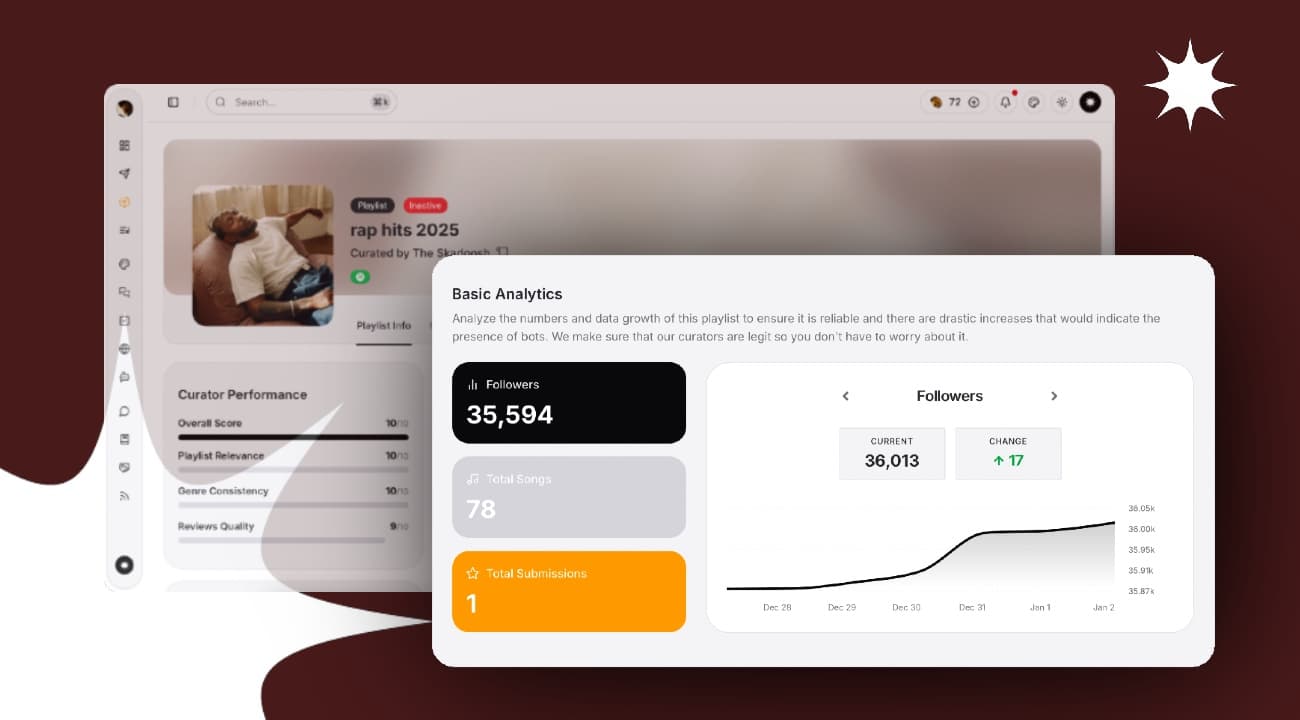
We often get caught up in the number of followers, when assessing the value of a Spotify playlist. Well-known as a vanity metric, it doesn't tell the whole story. You need to dig deeper and look at metrics such as the Stream-to-Follower ratio, historical growth curves and the origins of the listeners to tell if a community is genuine or a bunch of automated software. Coming to know the intricacies of Spotify playlists is basically the only way to shield your artist profile from inaccurate data.
In today's world, independent artists can find their audiences on Spotify playlists, and that is the main battleground for discovery, unfortunately it’s littered with unscrupulous people who claim fake streams as real promotions. When you send your music to the wrong playlist, not only do you waste money but also kick off Spotify’s automated fraud detection systems, leading to tracks being taken down or put in limbo, and as a consequence, analysis of playlists is not just a marketing tactic, it’s a necessary survival skill.
The Anatomy of the Playlist Ecosystem
To dissect a playlist, you first need to see how it sits within Spotify’s Recommendation Engine, which categorizes playlists into three types. Comprehending these classifications allows you to set realistic expectations for your music marketing strategy.
- Editorial playlists, curated by Spotify’s internal team, like “New Music Friday” and “Lore” are the cream of the crop in the industry, boasting high trust scores and colossal reach. Unfortunately, you can’t submit your work to them without being part of the official Spotify for Artists program. The soundscape of these playlists will tell you exactly what the editors are into in terms of sonic texture and song composition.
- Algorithmic Playlists, such as “Discover Weekly” and “Release Radar” are completely driven by code. They live off user behavior, like skip rates, save rates, and share ratios. The trick is to produce high-quality content that will induce these algorithmic placements.
- The world of user-playlists, where third-party entities like brands, music blogs and influencers put together their lists, is a lawless domain. And here is where the divide between serious fans and malicious bots is impossible to tell apart, you need to dig into the data.
You're presented with a sea of numbers, but there are four main indicators that will help you know if a playlist is worth investing your time and money into, when you evaluate a playlist.
Key Metrics for Playlist Evaluation
Coming fast into a playlist analytics tool, you'll see a mix of metrics, but focus on the four key 'health markers'.
The Stream-to-Follower Ratio is the most important, and it compares the number of streams a playlist generates to its follower count, and if it's a playlist with 100,000 followers that's only getting 500 streams a month, it's very suspicious. We look for the Active Listener Ratio to be somewhere between 1% to 5%, and if it's less than that, it's an issue.
Monthly Listeners, checking the profiles of the artists on the list is one way to see if the playlist is even real, and one artist featured on a "Hit Music" playlist with 50k followers but only 15 monthly listeners of their own, pretty much rules out that playlist.
Now, Historical Growth Curves, unlike real growth that's organic and goes up like a staircase, have been tampered with, and if a playlist has gained 50,000 followers overnight and stayed completely still for three months, is a dead giveaway for Bot Injection. Legitimate playlists go up and down in line with the success of their popular songs, or after the curator kicks off a marketing campaign on TikTok or Instagram and lose followers naturally over time. But a completely flat line or a vertical spike in this area is usually artificial.
Well-known as the "Generic Trap" a healthy playlist has a very clear identity or vibe. For example, "Sad Indie Folk for Rainy Days", but if a playlist is throwing in a wild mix of genres like Death Metal, Mumble Rap and Classical Piano, it's a "Pay-for-Placement" list. These kinds of lists don’t care what kind of music they play, just take money from anyone, and ruin the listening experience for everyone else, and genuine listeners won't follow them, but rather, bots do.
You can also check the entity behind the list, the curator, and see if they have a reputation outside of Spotify. Real curators build brands or media companies, they don’t just disappear. When checking the curator, check if they've linked a TikTok or Instagram profile in the playlist description, if they have a branded website or blog and if their user profile has a real face and name.
Tools of the Trade
Looking at to understand a playlist you can't rely on just your eyes. You'll need to use software that can scrape the Spotify API to bring the data to life. There are some well-known tools in the industry that range from free, no-frills utilities to enterprise-grade systems.
- Chartmetric is essentially the go-to solution for major labels and large management firms, because it can monitor cross-platform performance and tell you if a playlist add has led to a surge in Shazam searches or TikTok usage, coming running over down to the most granular level of "Playlist Journeys" that lets you see which small playlist leads to which big one.
- Spot On Track is a robust analytics tool that does its thing with chart positions and daily playlist movements, something that makes it perfect for calculating the return on investment for your own track's performance after being placed on a playlist. It presents really detailed graphs that help you see if a curator is burying your track at the bottom of the list.
- Is It A Good Playlist is a friendly, user-friendly tool, and is basically the baby brother to Chartmetric, but it’s designed for the self-releasing artist who wants to know if they should send a message to a particular playlist owner. It gives them a sort of "trust score” based on follower growth patterns and the way the curator is interacting with the playlist.
- Artist.tools is where you can get down to the nitty-gritty of bot detection and safety. They keep a running list of known fraudulent playlists and check your submission against this database. Extremely effective at filtering out scammers before you even get started.
Detecting the "Black Market"
Now, the darker side of music promotion is "Bot Farms” or networks of thousands of fake accounts streaming music around the clock, artificially inflating numbers. Spotify doesn’t like this, and is squashing down on it, deleting tracks that get artificial streaming. The signpost you can watch out for is suspiciously high streaming numbers.
Some scammers build "Walled Gardens", a chain of 50+ playlists that all feature the same tracks in the same order, and if you spot a curator who has two dozen lists with different names, but basically contain 90% the same music, it’s a link farm, and probably won't last long.
If you're a Country artist from Nashville, but 95% of your streams are coming from a town in a country that doesn't really consume Country music, you're probably being "botted", when checking your Spotify for Artists geographic data. Well-known real viral trends spread regionally, so it's highly unlikely that one specific city in the other side of the world would just suddenly start playing your song all over the place without any help.
How to Use Analysis Data in Your Strategy
Coming from verified analysis, once you've confirmed that a playlist is safe, you need to bring that information into your submission strategy.
You shouldn't just be aiming for the biggest playlists, because they're saturated and hard to get into, use your analysis to find "Bridge Playlists". Smaller ones, 1,000 to 10,000 followers, that have got a lot of engagement, and are a lot easier to get into. They also feed into larger playlists so they’re basically acting as a stepping stone for you.
When reaching out to a curator, use the data you dug up. Don't send a generic message, say something like “I noticed your 'Indie Vibes' playlist grew by 20% last month, and features artists like The 1975, my new track is right in that sonic groove, and here's why.” That shows the curator that you’ve done your research, and aren't just sending them any old song.
Finally, keep a close eye on your Save Rate after you’ve been placed, a real playlist will send your listeners scrambling to save your song, not just play it. When a playlist has 1,000 Streams and zero saves, it's a sign that the listeners are either completely passive, or faking. Well-known, this means I wouldn't pitch to that curator anymore.
The Role of Indiestar in Vetting
Manually sorting through every single playlist URL is a time-consuming and boring task. Requiring numerous tool subscriptions and hours of data entry, which is where Indiestar kick in and change the game.
Indiestar functions as a pre-vetted marketplace, and its internal team uses top-of-the-line analysis tools to verify every single curator within their network, so you don’t have to. When you send a playlist to the Indiestar Playlist Submission platform, you’re essentially accessing a database that's been thoroughly cleaned out of fake accounts, non-functional playlists, and scammers.
Final Thoughts on Data Hygiene
Coming from the world of algorithmic music platforms, your data profile is basically your reputation, and feeding the algorithm low-grade data from untrustworthy playlists will throw it off balance. It won't be able to figure out who to recommend your music to, effectively freezing your growth.
You can either learn to rigorously analyze Spotify playlists yourself or partner with a trusted platform like Indiestar that does the hard work for you, ensuring that every single stream counts.
What's Indiestar?
Indiestar is a music promotion toolkit built for independent artists who want a clearer, more effective path to growing their audience. With free playlist submissions, built-in promotional tools, and a framework designed to help artists plan smarter releases, Indiestar empowers musicians to improve the way they promote their music and connect with real listeners. Our curated playlists, targeted listener reach, and artist-focused workflow make it easier to run campaigns that feel both strategic and authentic. Indiestar gives artists the structure they need to grow while staying fully independent.
For more information contact:
suport@indiestar.io or via live chat widget